
Reclamation, for me, isn’t a trend or a theme. It’s a way of being. Every brushstroke, every upcycled material, every carefully chosen color is an act of gathering what was scattered and calling it into coherence.
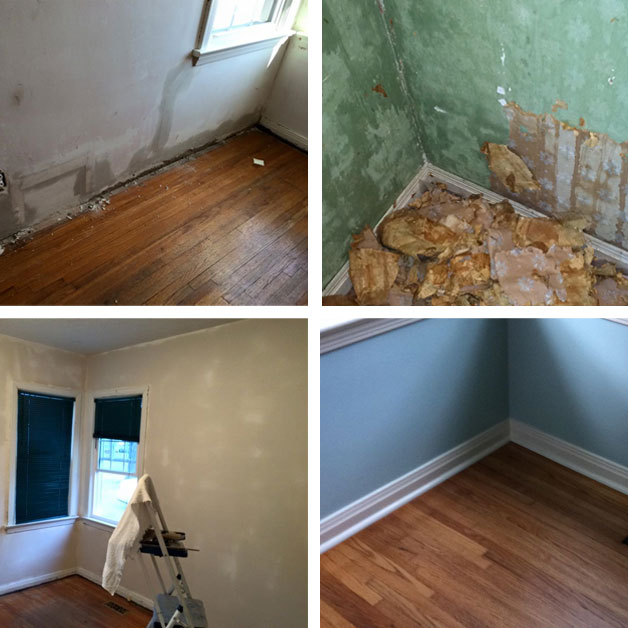
I live in the house where I experienced some dreadful trauma, and everyone asks why I haven’t moved. Here’s the thing: my greatest strength has been built by facing the awfulness and alchemizing the fragments of myself into one integral whole. As I have done my internal work toward congruity, my external world has begun to align with it. I’ve been transforming my home room by room, not out of nostalgia, but as an act of embodied archeology.
This is what I mean when I call myself The Reclamation Queen. I take what was meant to silence and submerge, and turn it into beauty that speaks. I take what was meant to destroy and turn it into defiant structure.
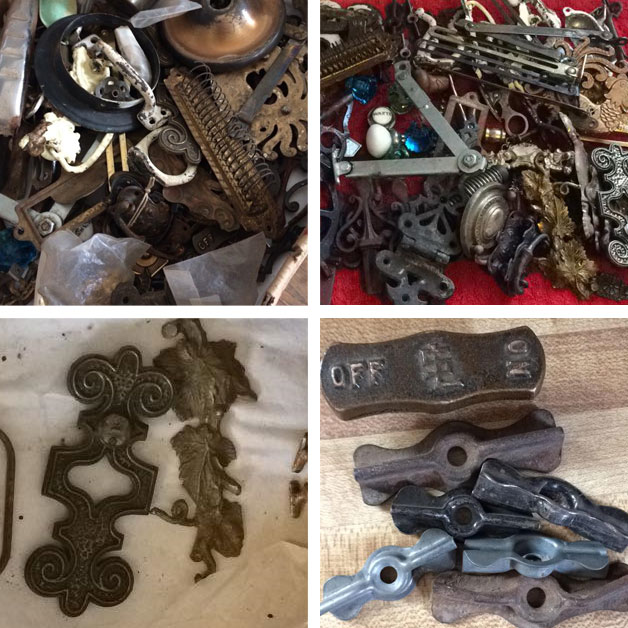
In my studio, not everything begins pristine. Some pieces start with new canvas and paint, others with fragments that have already lived a full life: wood that bears old nail holes, metal with a hint of rust, fabric worn thin from someone else’s story. They arrive imperfect, but they arrive honest. When I build a piece, I don’t try to erase their past. I integrate it. The seams, the scars, the burn marks—they stay visible. Whether new or reclaimed, every material becomes a witness, waiting to be shaped into something sacred.
That same principle guides the inner work that fuels my art. For years, I wasn’t aware of how many parts of myself I had submerged just to survive, or how often I allowed what was sacred in me to be used. I didn’t imagine healing would mean gathering those parts, getting to know them, and welcoming them home. Reclamation taught me that wholeness doesn’t mean returning to how things were before; it means gathering every fragmented part, dust and all, and saying: You belong here too. My art and my healing are both made of that gesture — the open hand that says, You still have a place in the story.
When people walk into my studio or see a finished painting, they often describe a feeling of lightness, but also gravity, a sense that something heavy has been lifted, not hidden. That’s because the materials themselves have been redeemed. They’ve gone from forgotten to foundational. And somewhere in that process, so have I.
Reclamation is both an aesthetic and a theology. It’s the conviction that beauty is not the opposite of ruin; it’s what grows out of it. It’s what happens when chaos becomes composition. When language is no longer used as a weapon but as a bridge. When we stop performing survival and start creating from our truth.
This is what art can do: it can turn the detritus of a life into architecture. It can turn pain into pattern, and history into home.
That is reclamation.
That is my work.
That is the life I’m building, one brushstroke, one boundary, one resurrection at a time.
◉ If something in this resonates — if reclamation feels like your language too, come see how it looks in form and color.